What is Curing in Construction?
If you’ve ever seen workers pouring water on a newly made slab or column and wondered “Why are they doing that?” — that process is called curing.
In simple words, curing means keeping concrete moist after casting so it can gain proper strength and avoid cracks.
Concrete does not become strong just by drying.
It becomes strong because of a chemical reaction between cement and water, which is called hydration.
If the concrete loses water too early, the reaction stops, and the concrete becomes weak.
That’s why curing is one of the most important steps in construction.
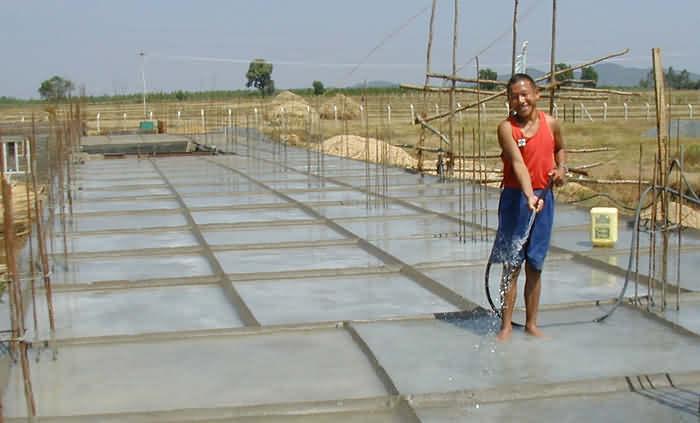
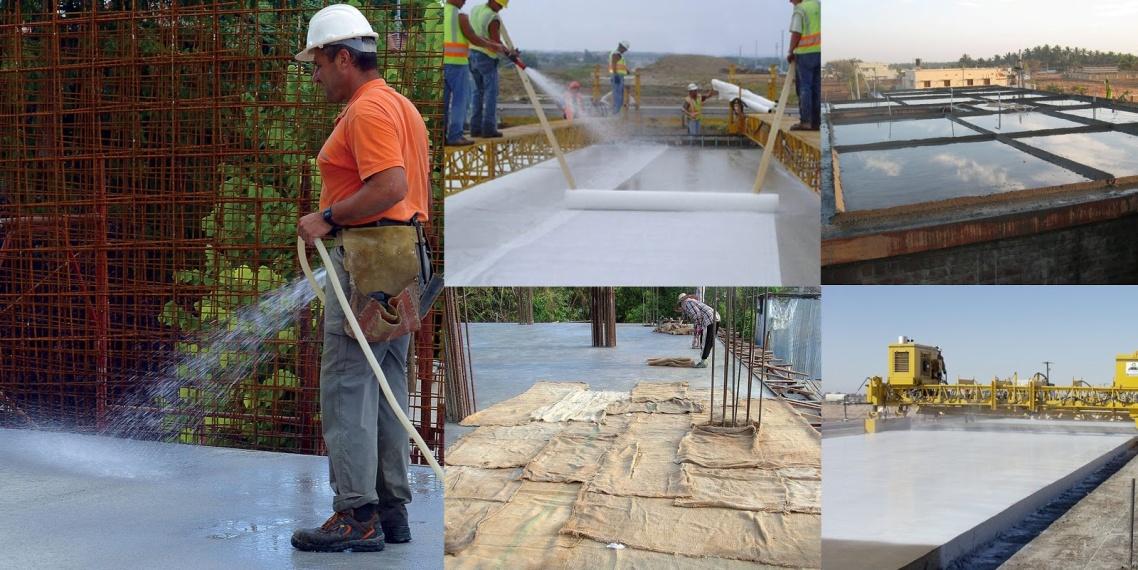
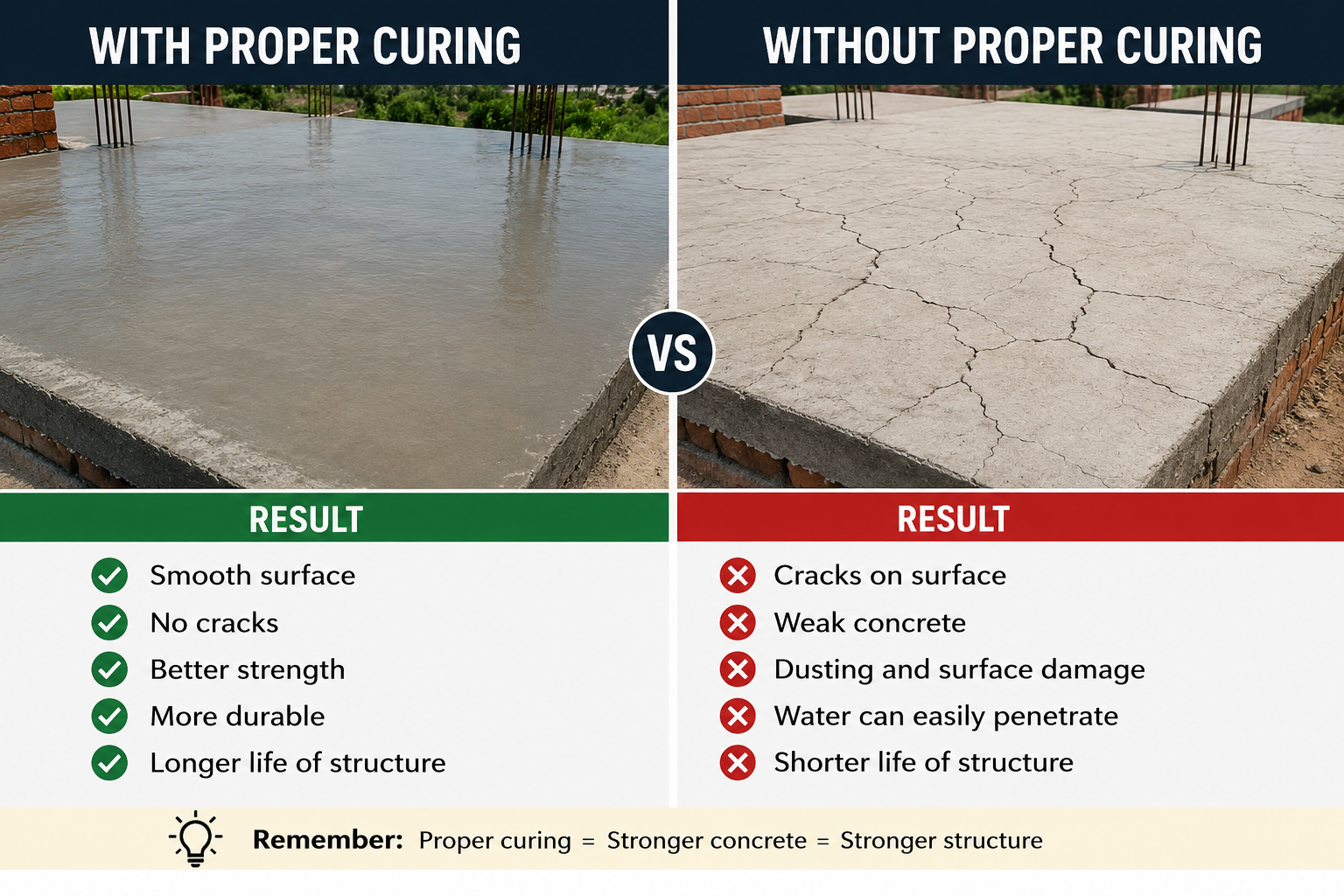
Fig: Curing of concrete
Why is Curing Important?
Proper curing helps concrete to:
- Gain full strength
- Prevent surface cracks
- Increase durability
- Reduce dusting and shrinkage
- Improve water resistance
- Increase the life of the structure
Without proper curing, even good-quality concrete can fail earlier than expected.
What Happens if Curing is Not Done Properly?
Poor curing can cause:
- Cracks on slab and walls
- Weak concrete strength
- Surface damage
- Water leakage problems
- Reduced durability
Sometimes a structure may look fine from outside, but internally the concrete may already be weak because curing was ignored.
Common Methods of Curing
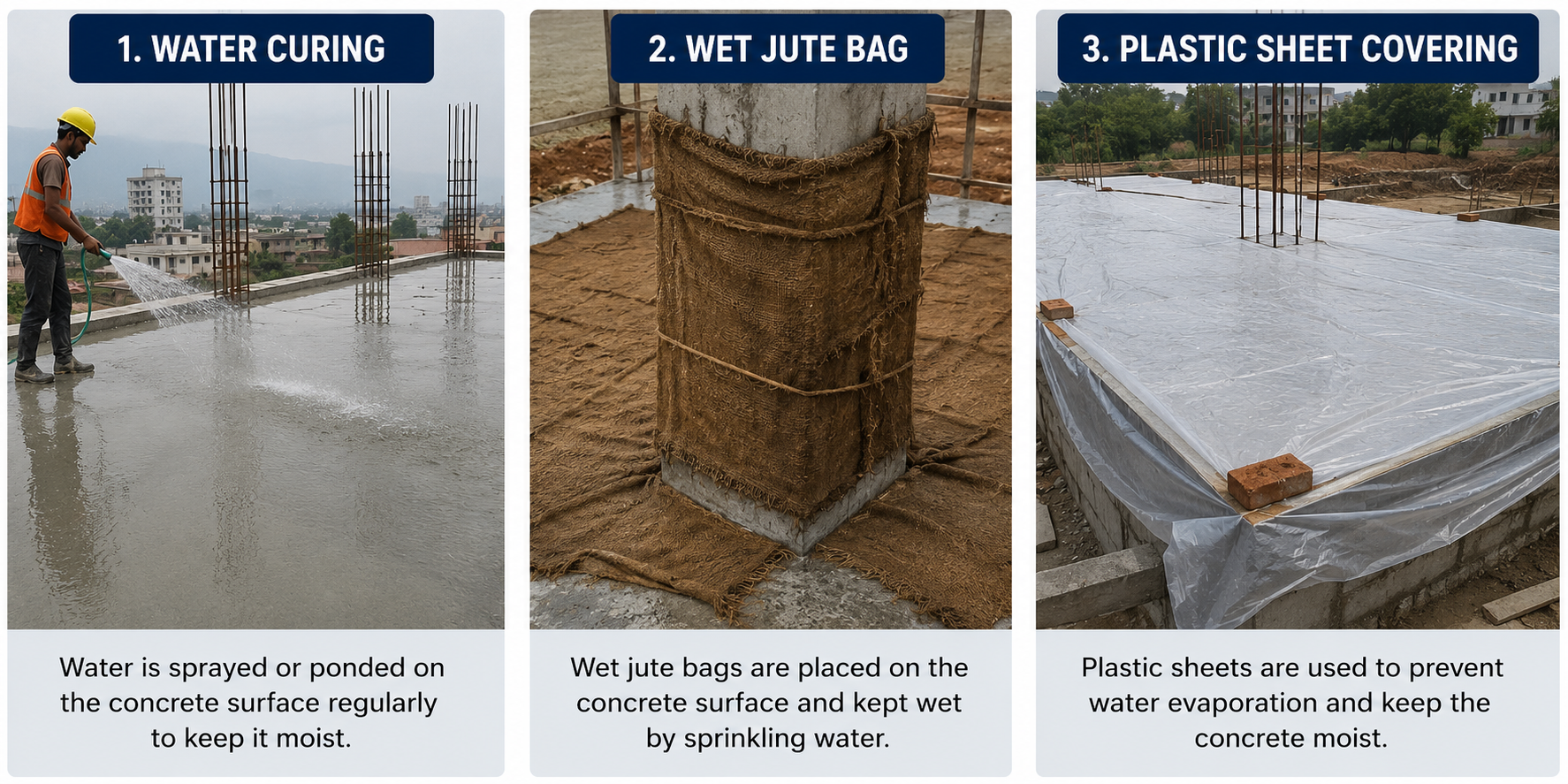
1. Water Curing
This is the most common method.
Water is sprayed or poured on the concrete surface regularly to keep it moist.
Examples:
- Ponding on slabs
- Sprinkling water
- Wet jute bags on columns and beams
2. Plastic Sheet Covering
Plastic sheets are used to stop water from evaporating quickly.
Mostly used where water availability is low.
3. Curing Compound
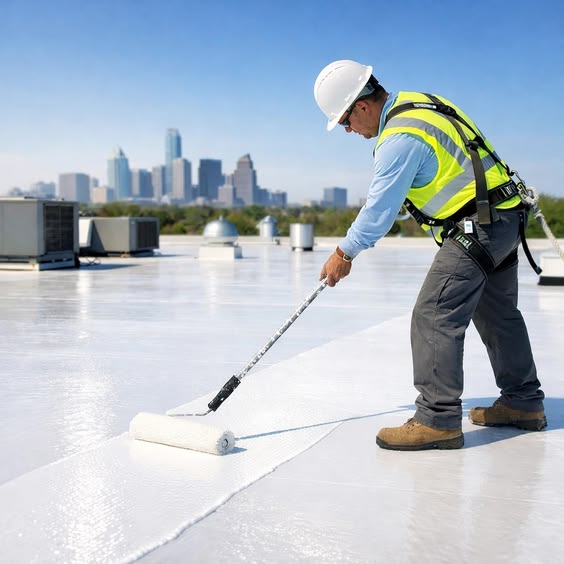
A chemical liquid is sprayed on concrete surfaces to lock moisture inside.
Common in large commercial projects and road works.
How Long Should Concrete Be Cured?
Generally:
- Minimum curing period: 7 days
- For better strength: 14 days
- In hot weather, extra care is needed because water evaporates faster.
Higher-grade concrete may require longer curing.
Simple Real-Life Example
Think of concrete like a plant.
A plant needs water regularly to grow properly.
Similarly, concrete also needs moisture for a certain time to gain strength.
No water = weak growth.
Same with concrete.
Final Words
Many people focus only on cement, rods, and design while building a house.
But in reality, proper curing is what helps concrete achieve its actual strength and durability.
Even the best concrete mix can perform poorly if curing is neglected.
That’s why engineers always say:
“Concrete work is not finished after casting — curing is equally important.”
Homeplex Tip:
Never ignore the curing process while building a house. Always make sure your engineer or construction team is following proper curing methods. Good curing can greatly reduce future cracks, leakage problems, and unnecessary repair costs.
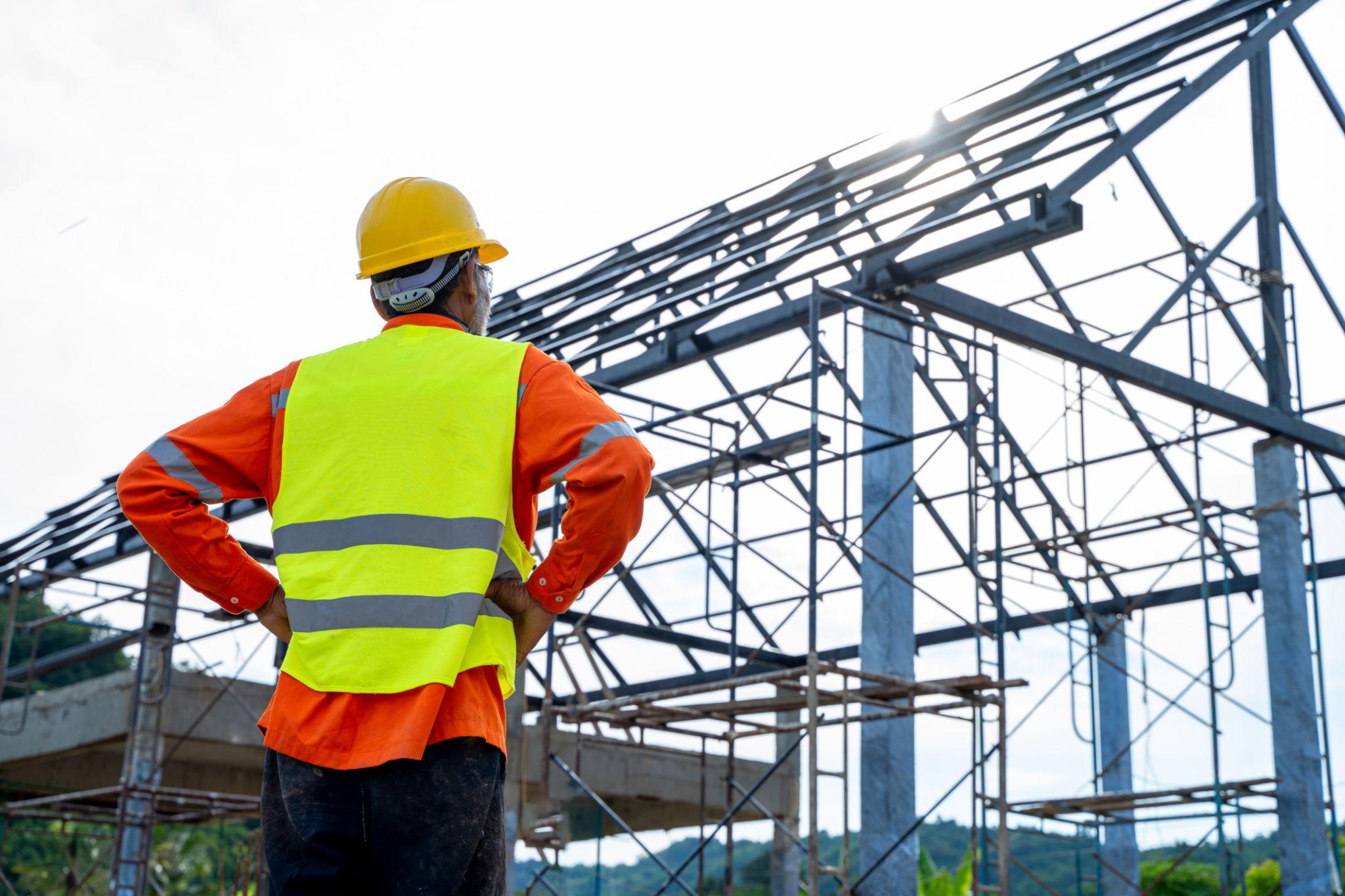
Fig: Civil Engineer checking work and management in the construction site